What Is Net 30? Invoice Payment Terms Explained
By FreeBillKit Team · June 17, 2026 · Updated August 12, 2026
Net 30 means the full invoice amount is due within 30 days of the invoice date. Net 15 and Net 60 are the same idea with shorter or longer windows, and Due on Receipt means pay now. The “net” is the amount owed after any discount; the number is the days to pay it.
Payment terms look like a secret code the first time a client puts “2/10 Net 30” on a PO. They’re not complicated once you know that nearly all of them are just a countdown of days, and getting them right is the difference between steady cash flow and quietly financing someone else’s business.
Net 30 due-date calculator
Pick the invoice date and the terms, and this works out the exact due date for you.
What Net 30 actually means
The “net” is the amount owed after any discounts, and the number is how many days the buyer has to pay. So Net 30 is shorthand for “pay the full amount within 30 days.” That’s the whole rule. Everything else is a variation on the window.
Common payment terms
| Term | What it means |
|---|---|
| Due on Receipt | Pay as soon as the invoice arrives |
| Net 7 / Net 15 | Pay within 7 or 15 days |
| Net 30 | Pay within 30 days (the most common) |
| Net 60 / Net 90 | Pay within 60 or 90 days, common with larger firms |
| EOM | Due at the end of the month the invoice was issued |
| 2/10 Net 30 | 2% off if paid within 10 days, otherwise the full amount in 30 |
When does the clock start?
Usually the invoice date, not the delivery date or the day the client opens the email. That distinction matters more than it sounds. If you deliver on the 1st but invoice on the 10th, your Net 30 runs from the 10th. State the issue date clearly so there’s no argument later.
How early-payment discounts actually work
“2/10 Net 30” trips a lot of people up. It’s two offers in one line: pay within 10 days and take 2% off, or pay the full amount by day 30. For the client it’s a small reward for paying early; for you it’s a nudge to get cash in faster. Whether giving up 2% is worth it depends on how badly you need the cash flow.
Should you offer Net 30?
Net 30 is really a short-term loan to your client, so match the term to the risk. For a new client or a one-off job, keep it tight. Due on Receipt or Net 7 stops you financing someone else’s cash flow. For established clients and big companies, Net 30 is the norm and pushing for less can cost you the relationship. If a client insists on Net 60, price that delay into your rate.
Putting terms on the invoice
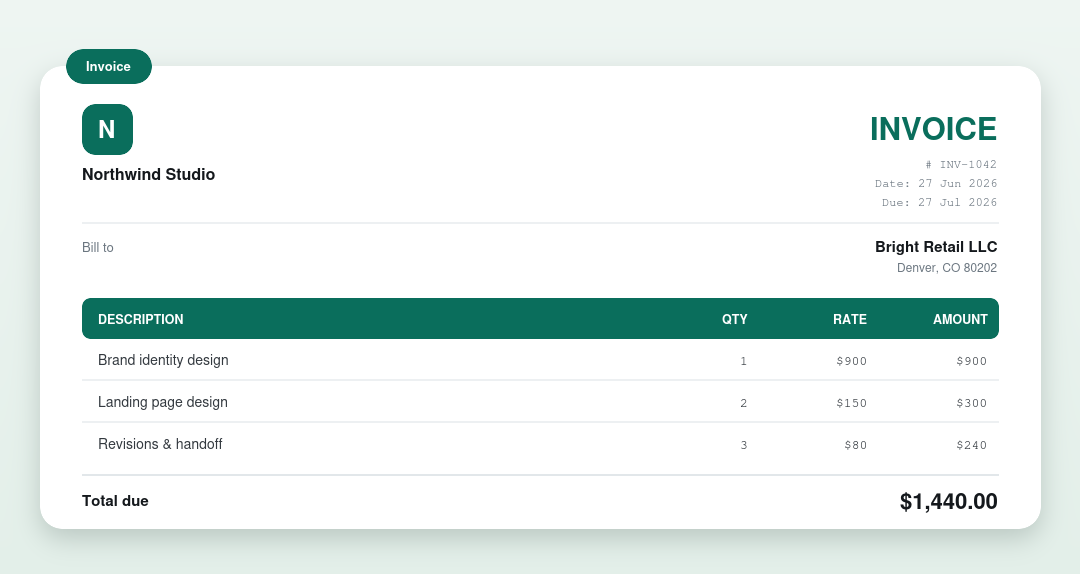
Write the term plainly and back it with a real date, for example “Net 30, due 21 July 2026.” A concrete date gets paid faster than a term people have to do mental maths on. Put your accepted payment methods right next to it so there’s no friction when they decide to pay. If a payment slips, here’s how to collect an unpaid invoice.
Set terms in seconds
The free invoice generator lets you set the terms and fills in the due date for you, then downloads a clean PDF. Need to quote first? Use the quote and estimate generator.
Frequently asked questions
What does due upon receipt mean?
Due upon receipt means payment is expected as soon as the client gets the invoice, with no grace period at all. It is the shortest possible terms, stricter than Net 7, and it works best with clients who already pay reliably.
What does Net 30 mean?
Net 30 means the full invoice amount is due within 30 days of the invoice date.
When does the Net 30 period start?
From the invoice date, not the delivery date or the day the client opens it, so state the issue date clearly on the invoice.
Is Net 30 good for small businesses?
It’s standard for established and larger clients, but for new or one-off clients shorter terms like Due on Receipt or Net 7 protect your cash flow.
What does 2/10 Net 30 mean?
A 2% discount if the invoice is paid within 10 days, otherwise the full amount is due within 30 days.
Written by the FreeBillKit team. Last reviewed July 2026.