Roofing Estimate Template
A roofing estimate should state the roof area in squares, whether the price covers tear-off, what materials and warranty are included, and, critically, what is excluded. Add a validity period, because material prices move. If the job is an insurance claim, note whether the figure matches the carrier scope. Build one free below.
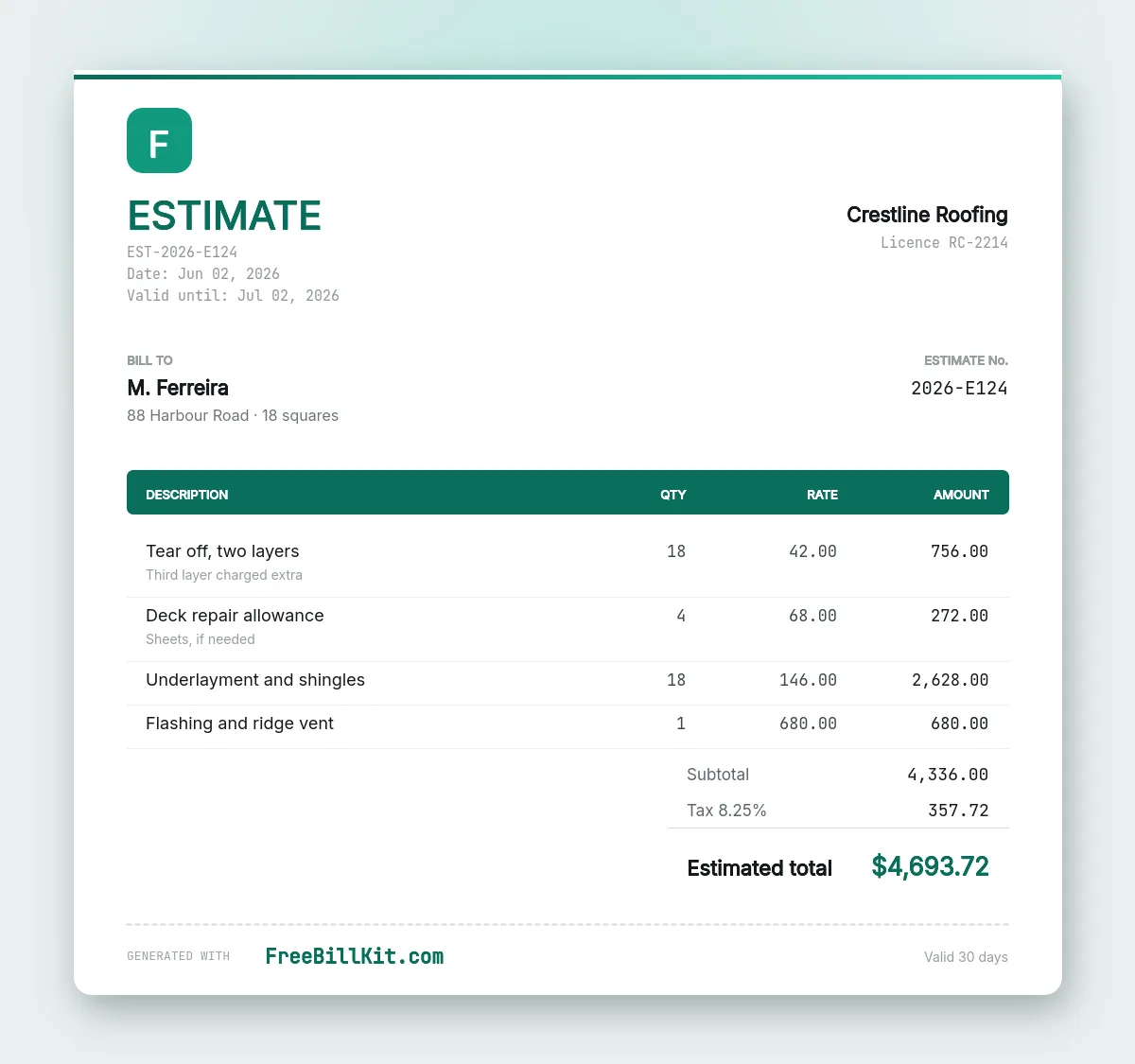
No signup. Fill it in and download the PDF in under a minute.
Homeowners almost never compare roofing bids like for like. One estimate includes tear-off and a synthetic underlayment, another assumes an overlay on the existing shingles, and the cheaper number wins even though it is not the same job. The estimate that gets accepted at a fair price is usually the one that makes the difference obvious before the homeowner has to ask.
What a roofing estimate should include
| Section | What it sets out |
|---|---|
| Measured area | Squares, pitch and number of existing layers |
| Scope of work | Tear-off or overlay, decking inspection, ventilation |
| Materials | Shingle line, underlayment, ice and water shield, flashing |
| Exclusions | Rotten decking, chimney work, gutters, and their unit rates |
| Warranty | Manufacturer material warranty and your workmanship term |
| Validity & terms | How long the price holds, deposit and payment schedule |
The line that saves the most arguments
Decking. Nobody knows what is under the shingles until the tear-off is done, and a roof with soft sheathing can add hundreds to the job. An estimate that says nothing about it forces an awkward mid-job conversation. An estimate that reads “replacement decking, if required, billed at $X per sheet, not included in the price below” turns the same conversation into a line the homeowner already agreed to.
The same applies to chimney flashing, skylights and gutters. Naming them as exclusions with unit prices is not a caveat, it is what makes the headline number trustworthy.
A worked example
- Measured area: 28 sq · pitch 6/12 · 1 existing layer
- Scope: full tear-off, deck inspection, synthetic underlayment, ice and water at eaves and valleys, ridge vent
- Materials: architectural shingles, 30-year manufacturer warranty
- Labour and installation, 28 sq
- Dumpster and site clean-up, magnet sweep
- Estimate total $9,590.00
- Excludes: replacement decking $68/sheet · chimney reflash $420 · gutter replacement quoted separately
- Valid 30 days · 25% deposit on scheduling, balance on completion
Insurance claims
Where a carrier is paying, the estimate is usually compared against the adjuster scope rather than against competing bids. Reference the claim number, itemise the same way the scope does, and note anything you believe the scope has missed as a supplement request rather than burying it in the total. Also state whether the figure is actual cash value or replacement cost, since the homeowner’s out-of-pocket depends on it.
Create a roofing estimate free
Enter scope, materials, exclusions and terms, then download a clean PDF the homeowner can compare against other bids. No account, no watermark.
Won the job? Bill it with the roofing invoice template. Ordering materials? Use the purchase order generator.
Related templates
- Construction estimate template
- Painting estimate template
- Roofing invoice template
- All templates · Quote vs estimate vs invoice
Frequently asked questions
How long should a roofing estimate stay valid?
Thirty days is common, and shorter is reasonable when material prices are moving. State the period on the document. Without it, a homeowner who accepts four months later expects the original figure, and shingle costs may have changed substantially in between.
Should decking replacement be included in the estimate?
It cannot be, because nobody knows the condition of the sheathing until the old roof is off. List it as an exclusion with a per-sheet rate so the homeowner has agreed the price in advance rather than being asked to approve it mid-job.
Is a roofing estimate binding?
Generally an estimate is a considered price rather than a fixed contract sum, and the terms you attach determine how much it can move. If you intend the figure to be firm subject only to named exclusions, say that explicitly. Ambiguity here is what turns a decking surprise into a dispute.