Construction Estimate Template
A construction estimate sets out the scope of work, a breakdown by phase or trade, allowances for items not yet selected, and a clear list of exclusions. Add the assumptions the price depends on, a validity period, and how change orders will be priced. Build one free below, no signup.
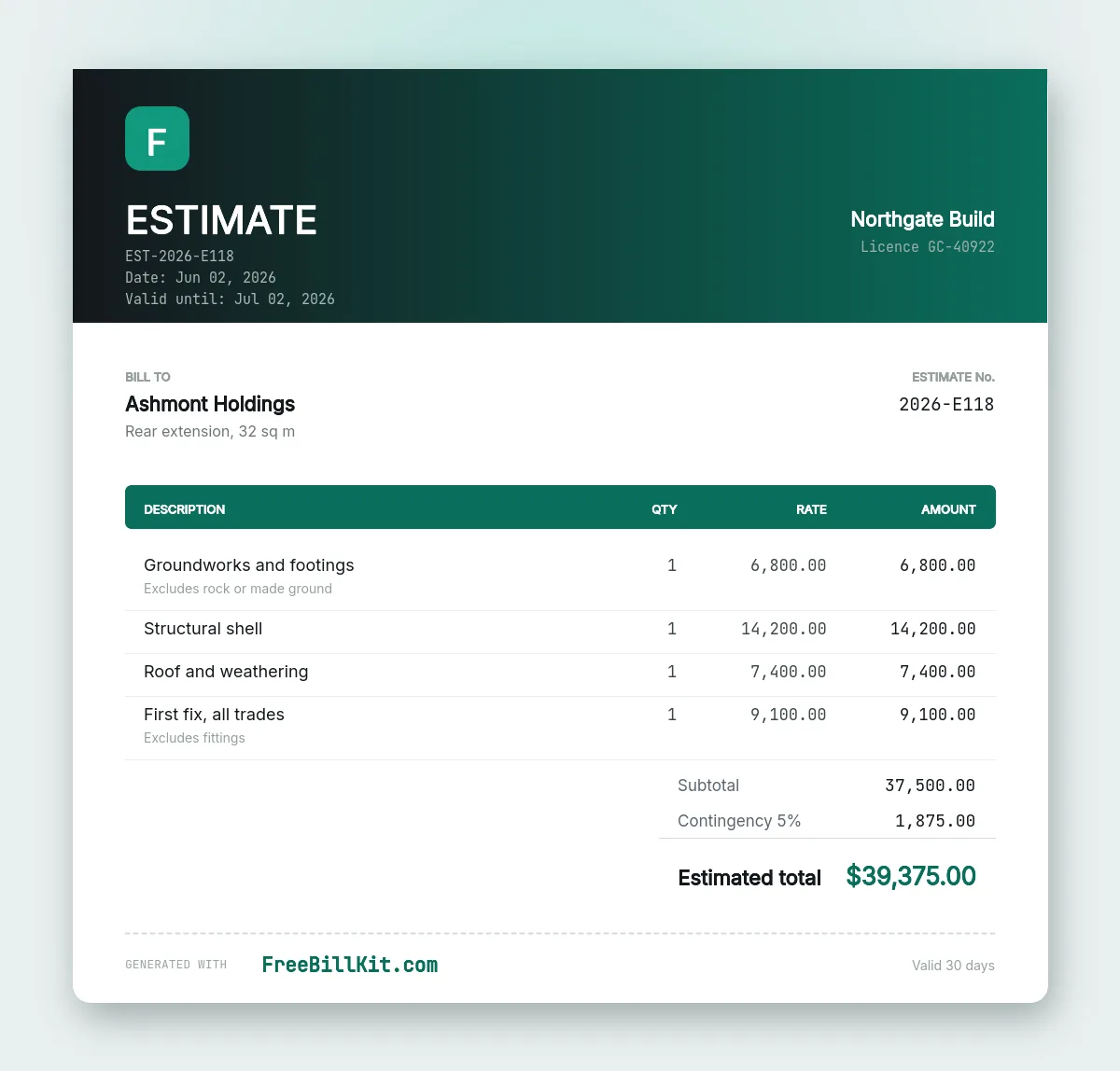
No signup. Fill it in and download the PDF in under a minute.
The difference between a construction estimate that holds and one that turns into a fight is almost never the arithmetic. It is the assumptions. Every builder prices a job against a mental picture of what the client wants, and the client has a different picture. Writing the assumptions down is the cheapest risk control available on any project.
What a construction estimate should include
| Section | What it sets out |
|---|---|
| Scope of work | What is being built, to what drawings or specification |
| Breakdown | By phase or trade, demo, framing, mechanical, finishes |
| Allowances | Budget figures for items not yet chosen (tile, fixtures) |
| Exclusions | What the price does not cover, stated plainly |
| Assumptions | Access, working hours, existing conditions, permit responsibility |
| Terms | Validity, deposit, payment schedule, change-order pricing |
Allowances vs exclusions
These get confused constantly, and they do different jobs. An allowance is money in the price for something the client has not chosen yet, such as “tile allowance $3,500 supply”. If they pick something dearer, the difference is a change order. An exclusion is work outside the price entirely, such as “excludes asbestos remediation”.
A client reading an estimate with neither will assume everything is covered at the number shown. Both sections take five minutes to write and remove most of the reasons a project ends up in dispute.
A worked example
- Scope: kitchen and rear extension per drawings dated 12 Jul, revision C
- Demolition and site protection: $6,200.00
- Structure, framing and roof: $48,500.00
- Mechanical, electrical and plumbing: $31,400.00
- Finishes and joinery: $42,800.00
- Allowances: tile $3,500 · plumbing fixtures $4,200 · lighting $2,000
- Estimate total $138,600.00
- Excludes: asbestos or hazardous material remediation, landscaping, appliances, planning fees
- Assumes: unrestricted site access 7am–5pm weekdays, existing foundations sound, owner obtains permits
- Valid 30 days · change orders priced at cost plus 15%
What makes estimates fail
- No drawing reference or revision. Scope drifts silently when the estimate does not name the version it was priced against.
- Allowances presented as final prices. Label them, or the client budgets as though the selection is settled.
- Change-order mechanism unstated. Agree how extras will be priced before any arise, not after.
- No validity period. Material and labour costs move; an open-ended estimate is a liability.
Create a construction estimate free
Enter phases, allowances, exclusions and terms, then download a clean PDF. No account, no watermark, nothing uploaded.
⇩ Create a construction estimate
Job awarded? Bill progress with the construction invoice template, which covers schedule of values and retainage.
Related templates
- Roofing estimate template
- Painting estimate template
- Construction invoice template
- All templates · Quote vs estimate vs invoice
Frequently asked questions
What is an allowance in a construction estimate?
It is a budget figure included in the price for an item the client has not selected yet, such as tile or plumbing fixtures. If the final selection costs more than the allowance, the difference becomes a change order. Labelling allowances clearly prevents clients treating them as fixed prices.
How detailed should the exclusions be?
Detailed enough that a client cannot reasonably assume something is covered. Common exclusions worth naming are hazardous material remediation, permit fees, landscaping, appliances and anything hidden behind existing finishes. Vague exclusions offer little protection.
Is a construction estimate legally binding?
That depends on how it is worded and on local rules. An estimate is typically a considered price rather than a fixed contract sum, whereas a formal quotation or contract sum is intended to be firm. If you want the figure treated as fixed subject to named allowances and exclusions, say so on the document.