Painting Estimate Template
A painting estimate should state the surfaces and areas being painted, how much prep is assumed, the number of coats, and the paint product and sheen. Name what is excluded (repairs, wallpaper removal, lead-safe work) and give the price a validity period. Build one free below, no signup.
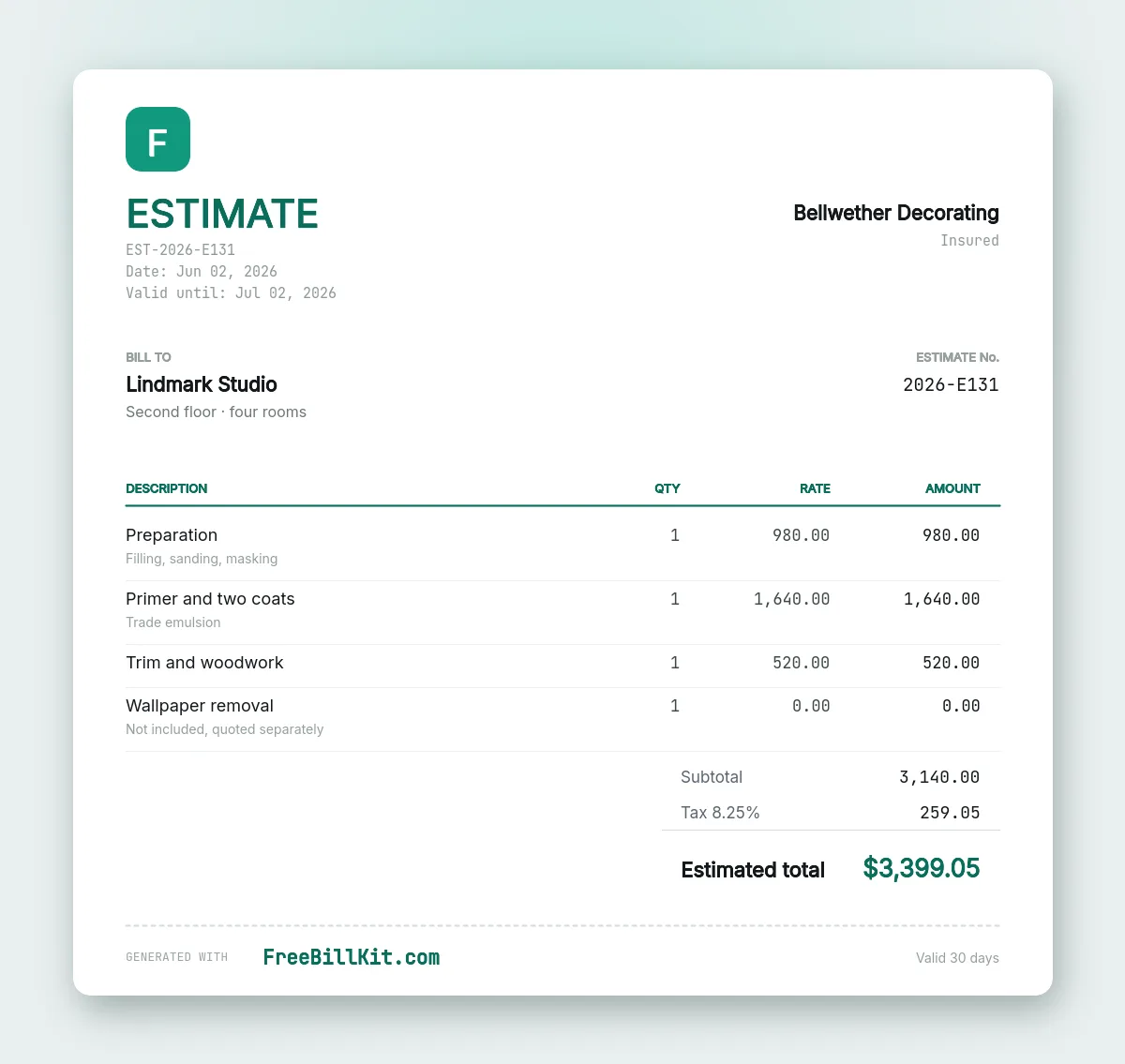
No signup. Fill it in and download the PDF in under a minute.
Painting estimates are compared more aggressively than almost any other trade, and usually on the wrong basis. Two bids arrive, one is $900 cheaper, and the homeowner does not realise the cheaper one assumed one coat over sound walls while the dearer one includes filling, sanding and two finish coats. Making that visible is the estimate’s real job.
What a painting estimate should include
| Section | What it sets out |
|---|---|
| Surfaces & areas | Rooms, walls, ceilings, trim, doors, listed, not assumed |
| Prep assumed | Level of filling, sanding, caulking and masking priced in |
| Coats | Primer plus how many finish coats |
| Paint specified | Product line and sheen, the main driver of price differences |
| Exclusions | Repairs, wallpaper removal, rot, lead-safe procedures |
| Terms | Validity, deposit, colour selection deadline |
Prep is the whole estimate
On a sound modern wall, prep is an hour. On hundred-year-old trim with three layers of failing gloss, prep is most of the job. If your estimate does not say which you assumed, you have either priced yourself out of the work or committed to unpaid hours.
The practical fix is a sentence: “Price assumes filling and spot-sanding of minor defects. Extensive filling, stripping or repair of damaged substrate is not included and would be quoted separately at $X per hour.” That is not hedging. It is the difference between an estimate and a guess.
A worked example
- Scope: interior repaint, living room, hall, 2 bedrooms; walls, ceilings, trim and 6 doors
- Prep: fill and spot-sand minor defects, caulk trim, full masking and floor protection
- Coats: primer where required plus 2 finish coats throughout
- Paint: premium eggshell to walls, semi-gloss to trim (product named)
- Estimate total $2,454.00
- Excludes: plaster repair, wallpaper removal, rot or damp treatment, lead-safe procedures if pre-1978 surfaces are disturbed
- Valid 30 days · colours to be confirmed 5 days before start · 20% deposit
What causes accepted estimates to go wrong
- Coat count omitted. The single most disputed assumption in painting.
- Paint grade unnamed. Clients who expected a premium product and received trade paint notice within a year.
- Colour changes unpriced. Dark over light needs more coats. Say so, and set a colour deadline.
- Room count vague. “Interior” means the whole house to a client and four rooms to you.
Create a painting estimate free
Enter surfaces, prep level, coats and exclusions, then download a clean PDF the client can compare properly. No account, no watermark.
Job finished? Bill it with the painting invoice template.
Related templates
- Roofing estimate template
- Construction estimate template
- Painting invoice template
- All templates · Quote vs estimate vs invoice
Frequently asked questions
How much prep should a painting estimate assume?
State it rather than assume it. A line describing the prep included, and what would be extra, is what separates a defensible price from an argument, particularly on older properties where filling and stripping can exceed the painting hours.
Should the estimate name the paint product?
Yes. Paint grade is one of the biggest drivers of price difference between competing bids, and clients comparing two numbers cannot see it otherwise. Naming the line and sheen also settles expectations about durability and finish.
What if the client changes colour after accepting?
Set a colour confirmation deadline on the estimate and note that dramatic changes, dark over light in particular, may need an extra coat and would be priced separately. Handled up front it is routine; handled mid-job it is a difficult conversation.