Bill Book Format (GST): Free Template + Generator
A bill book is the bound pad of serially numbered invoices that Indian businesses have used for generations. Each page is one invoice: you write the details, tear out the customer copy, and keep the counterfoil for your records.
Download Free Bill Book Format Template (.docx)
Under GST, the bill book format must carry every mandatory tax invoice field. This page shows the exact format, explains duplicate versus single books, sizes, and numbering rules, and gives you a free generator that produces the same invoice digitally in about a minute.
Everything here is free. There is no signup and no watermark.
Free bill book format alternative: generate invoices online
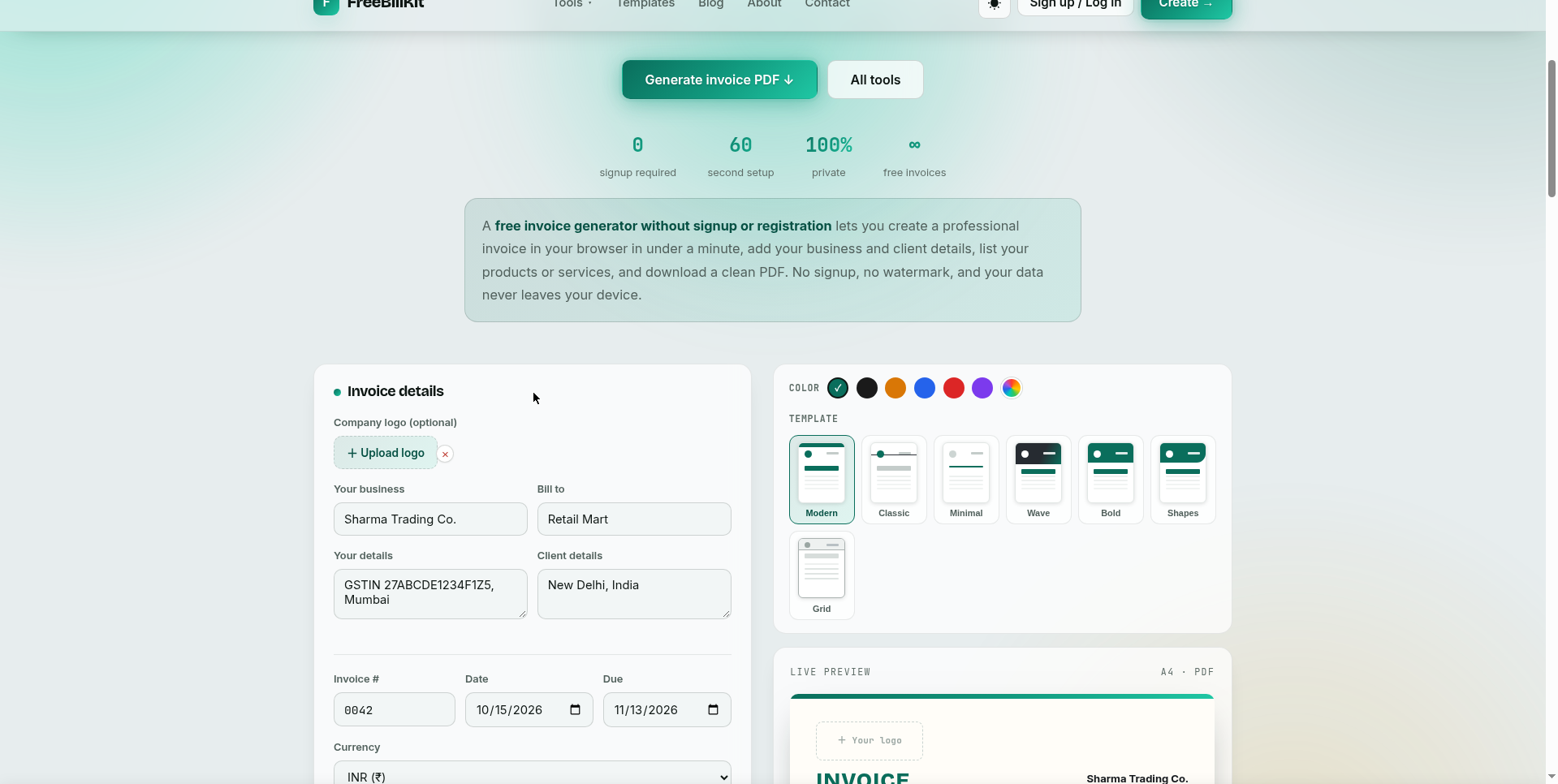
The free generator produces the same GST-compliant invoice as a bill book page, as a clean PDF, in about a minute. Enter GSTINs, items with HSN codes, and the tax breakup. Many businesses now use it alongside or instead of a physical bill book. No signup, no watermark.
Bill book format: what every page must include
Every page of a GST bill book is a tax invoice and must carry the Rule 46 fields:
- Your business name, address, and GSTIN (pre-printed).
- Consecutive serial number (pre-printed, unique per financial year).
- Date of issue.
- Buyer name, address, and GSTIN if registered.
- Place of supply with state name.
- Item descriptions with HSN or SAC codes.
- Quantities, rates, and taxable values.
- CGST/SGST or IGST breakup with rates and amounts.
- Total invoice value and amount in words.
- Your signature or stamp.
Get these pre-printed where possible. Pre-printing the fields you never change (business details, serial numbers, column headings) leaves less room for handwriting errors. The CBIC GST portal publishes the governing rules. See the CBIC portal for the official text.
Bill book format: sample page layout
A standard bill book page looks like this:
[YOUR BUSINESS NAME]
[Address] | GSTIN: [Your GSTIN]
----------------------------------------
TAX INVOICE No. 001/2026-27    Date: ___
Bill to: ______________________
GSTIN: ________________________
----------------------------------------
Sr | Particulars | HSN | Qty | Rate | Amount
1  |             |     |     |
2  |             |     |     |
3  |             |     |     |
----------------------------------------
Taxable value: ________
CGST @___%: ________ | SGST @___%: ________
Total: ________
Amount in words: ________________________
Signature: _______________
Duplicate books add a second perforated copy below each page for the customer.
Duplicate vs single bill book format
Single books. One copy per page. You write the invoice and hand the page to the customer, keeping no copy. Cheap, but you lose your record unless you photograph each page.
Duplicate books. Two copies per page on NCR (carbonless) paper: original for the customer, duplicate stays bound in the book. The standard choice for GST businesses because you always retain a copy for audits.
Triplicate books. Three copies: customer, transporter, and your file. Used where goods move with the invoice and the transporter needs a copy.
For GST compliance, duplicate is the sensible default. The retained copy is your proof during audits and disputes.
Bill book format: sizes and paper
A5 is the most common size for retail bill books: fits in a hand, enough room for 5-8 line items. A6 suits quick single-item bills at small counters. A4 fits wholesale dealers with long item lists.
Use NCR paper for duplicate and triplicate books so copies transfer cleanly. Standard 50- or 100-page books last most small businesses a few months. Number every page before the book goes into use.
If you print custom books, get one sample printed first to check alignment before ordering in bulk.
Bill book numbering rules
Number every page before use: one consecutive series per financial year (001/2026-27 onward). Never skip numbers, never reuse them, and never renumber a book mid-year.
Cancelled pages stay in the book. Write “CANCELLED” across them and keep them bound. A missing page looks like a missing invoice to anyone reviewing your records.
Start a fresh book each financial year with a fresh series. Keep finished books for the full record retention period.
Bill book format mistakes that cause problems
Unnumbered pages. Pages without pre-printed numbers get skipped or duplicated. Number the whole book first.
Single books with no backup. Handing over your only copy leaves you with no record. Use duplicate books or photograph every page.
Missing GSTIN. The supplier GSTIN must appear on every page. Pre-print it so it can never be forgotten.
Illegible copies. Faint NCR transfers are unreadable. Press firmly and replace the book when copies fade.
Mixing financial years. One book, one financial year, one series. Starting a new series mid-book breaks the sequence.
Bill book format FAQs
What is a bill book format?
The layout of a bound book of serially numbered invoices. Each page is one tax invoice carrying the GST mandatory fields, with copies for the customer and your records.
Is a printed bill book valid for GST?
Yes, as long as every page carries the mandatory fields: GSTIN, HSN codes, serial number, tax breakup, and signature. Printed books are fully valid.
Should I use duplicate or single bill books?
Duplicate. The retained copy protects you during audits and disputes. Single books leave you with no record unless you photograph each page.
What size bill book should I buy?
A5 for most retail businesses, A6 for quick counter bills, A4 for wholesale with long item lists. A5 is the safest default.
How do I number a bill book?
Pre-print consecutive numbers before use: one series per financial year, no gaps, no duplicates. Cancelled pages stay bound and marked.
Can I print my own bill books?
Yes. Many businesses print custom books with their logo and pre-filled business details. Get a sample printed first to verify alignment.
How long should I keep filled bill books?
Keep them for the full tax record retention period your jurisdiction requires. They are your primary proof of sales.
What if I lose a bill book?
Report the missing serial number range in your records and note it for audit purposes. This is why duplicate books and digital backups matter.
Can I switch from bill books to digital invoices?
Yes, anytime. There is no requirement to use physical books. The free generator above produces the same compliant invoice digitally.
Is this bill book format free to use?
Yes. Copy the format freely or generate the same invoice digitally with the free online tool. No signup, no watermark.
Related templates
- Invoice Generator: the digital alternative to a bill book
- GST Invoice Format: the full Rule 46 format guide
- Handwritten GST Invoice: rules for manual bills
- Delivery Challan Template: for goods moving without a sale