Moving Estimate Template
A moving estimate should state which type it is (binding, non-binding, or binding not-to-exceed), because that determines what the customer can be charged on delivery day. Include the inventory it was based on, the services included, accessorials that may apply, and the valuation coverage offered. Build one free below.
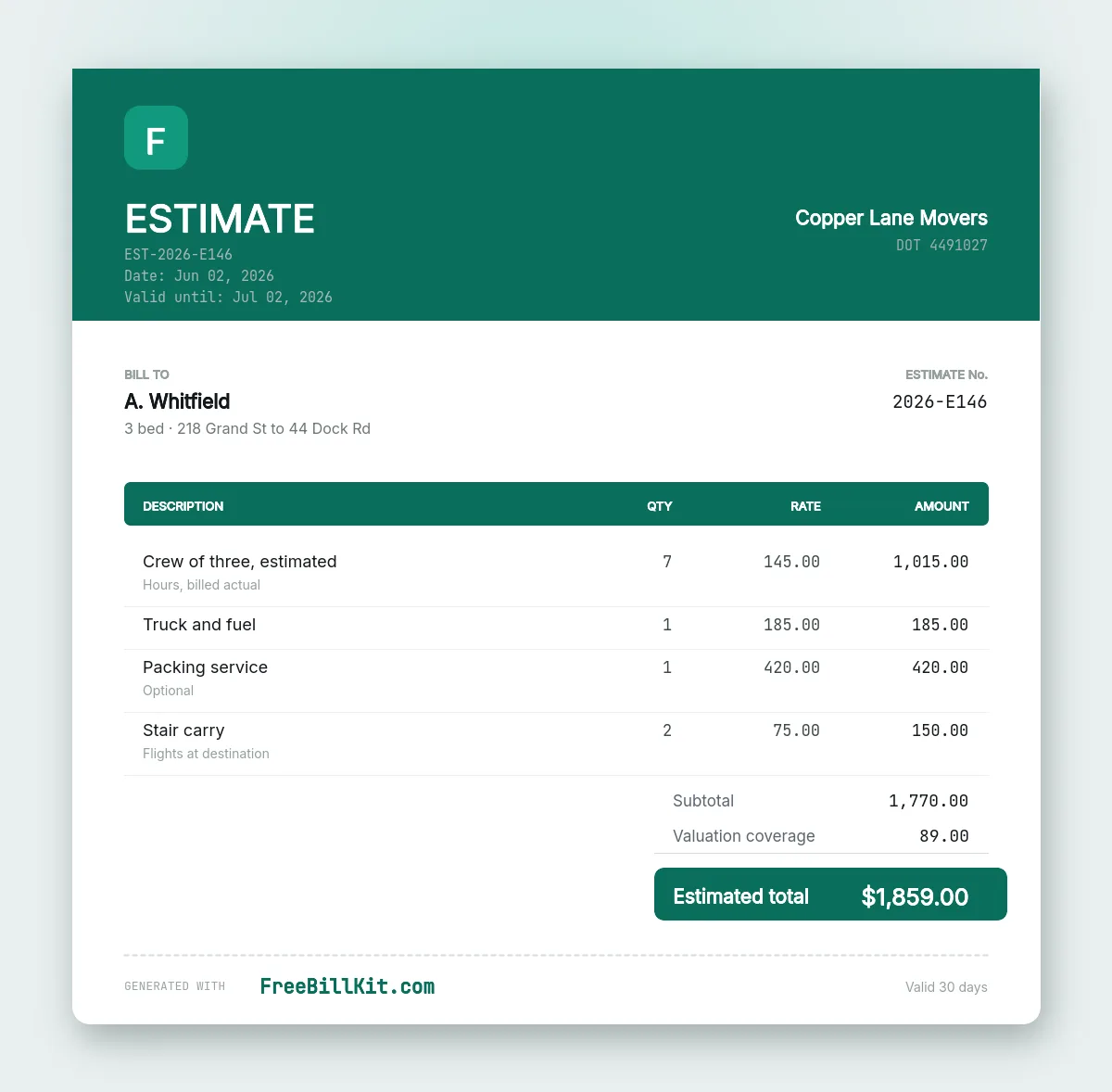
No signup. Fill it in and download the PDF in under a minute.
Moving is one of the few trades where the type of estimate carries as much weight as the number on it. A customer holding a binding estimate and a customer holding a non-binding one have very different protections, and most customers do not know the difference until delivery day. Naming the type at the top of the document is the single most useful thing a mover can do.
The three estimate types
| Type | What it means for the customer |
|---|---|
| Binding | A fixed price for the inventory and services listed. Adding items usually requires a revised estimate. |
| Non-binding | An approximation. The final charge is based on actual weight and services, so it can rise or fall. |
| Binding not-to-exceed | The customer pays actual charges, capped at the estimate. Favourable to the customer. |
Interstate household moves in the United States are regulated by the FMCSA, and the rules covering estimate types, required disclosures and how much can be collected at delivery are specific. Check the current requirements for the moves you perform rather than relying on a template. This page describes common practice, not legal advice.
What else the estimate should carry
- The inventory it was based on. A binding price only means something attached to a list. Attach it.
- Services included: loading, transport, unloading, and whether packing is priced in or extra.
- Accessorials that may apply: stairs, long carry, shuttle, bulky items, storage-in-transit, each with its rate.
- Valuation options: released value versus full value protection, with the cost of each.
- Dates: pickup window and estimated delivery spread.
A worked example
- Estimate type: binding not-to-exceed, based on the attached inventory dated 8 Aug
- Origin: 14 Ashford Road → destination: 22 Milton Way · local move
- 3 movers and truck, estimated 6.5 hrs: $877.50
- Truck and travel time: $285.00
- Packing materials, estimated: $142.00
- Anticipated accessorial: stair carry at destination (2nd floor, no elevator): $75.00
- Estimate total $1,379.50. Charges will not exceed this figure for the listed inventory and services
- Valuation: released value at $0.60/lb included · full value protection available at additional cost
- Items added on move day will be priced at the rates shown and may require a revised estimate
What causes moving-day disputes
- Estimate type not stated. Customers assume every estimate is a fixed price.
- No inventory attached. Without it, neither side can show what the price covered.
- Accessorials undisclosed. Stairs and long carries are foreseeable at survey; list their rates even if you hope they will not apply.
- Valuation not explained. Released value is a low liability limit, not insurance, and customers should be choosing it knowingly.
Create a moving estimate free
Enter the estimate type, services, accessorial rates and valuation options, then download a clean PDF to send with the inventory. No account, no watermark.
Move completed? Bill it with the moving company invoice template.
Related templates
- Moving company invoice template
- Trucking invoice template
- Construction estimate template
- All templates · Quote vs estimate vs invoice
Frequently asked questions
What is the difference between a binding and non-binding moving estimate?
A binding estimate fixes the price for the inventory and services listed, so adding items generally requires a revised estimate. A non-binding estimate is an approximation and the final charge is based on actual weight and services performed, meaning it can end up higher or lower.
What is a binding not-to-exceed estimate?
The customer pays the actual charges for the move but never more than the estimated figure. If the shipment weighs less than expected they pay less; if it weighs more, the estimate caps what they owe. It is the most customer-favourable of the three common types.
Should accessorial charges appear on the estimate?
Yes, with their rates, even where you expect they may not apply. Stairs, long carries and shuttle requirements are usually visible at survey, and a customer who first hears about them on moving day will treat them as an unexpected charge rather than a disclosed one.