Pharmacy Receipt Template
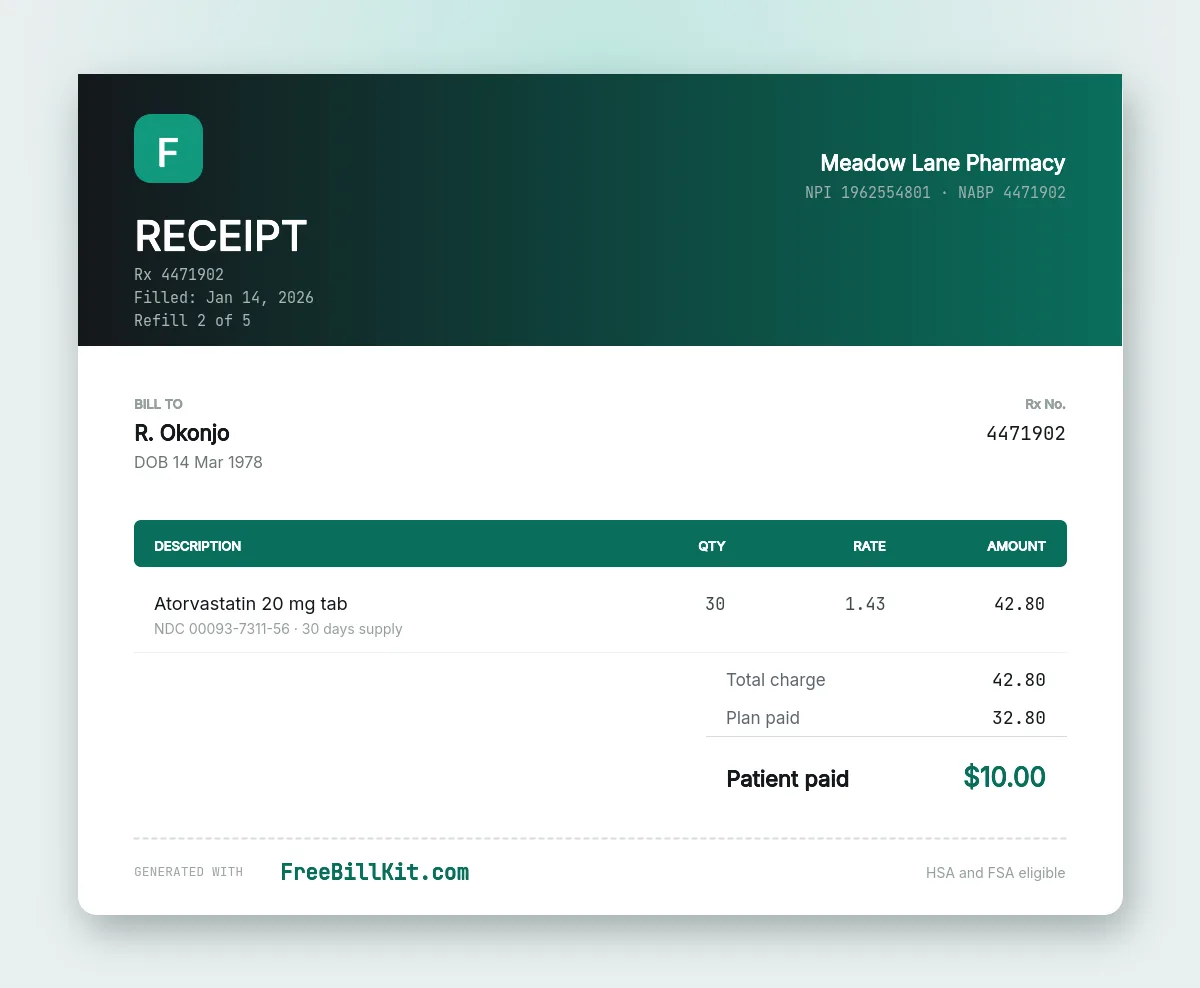
A pharmacy receipt is proof a patient paid for a dispensed prescription. It shows the pharmacy and its NPI, the patient, the prescription number and fill date, the drug with its strength, quantity and days supply, the NDC number, what insurance covered and what the patient paid. Benefit administrators need all of it before they will reimburse an HSA or FSA claim. You can make one free below.
No signup. Fill it in and download the PDF in under a minute.
The bag label is not the receipt, and the till slip is not either. One shows how to take the medication, the other shows a total. The document a benefits administrator wants sits between them, and pharmacies get asked for it constantly in January.
What goes on a pharmacy receipt
- Pharmacy name, address, phone, and the NABP or NPI number
- Dispensing pharmacist name or initials
- Patient name and date of birth
- Prescription number, and the fill or refill date
- Drug name, strength and dosage form, with generic or brand stated
- Quantity dispensed and days supply
- NDC number, which identifies the exact product dispensed
- Prescriber name and NPI
- Refills remaining, and the date the prescription expires
- Total charge, amount the plan paid, and the patient copay or coinsurance
- Payment method and date paid
- A note where the item is eligible for HSA or FSA reimbursement
One fill, written up
Filled 14 January. Atorvastatin calcium 20 mg tablets, generic, quantity 30, 30 days supply. NDC 00093-7311-56, prescription 4471902, second refill of five. Prescriber L. Adeyemi MD, NPI 1740028356. Pharmacy NPI 1962554801. Total charge $42.80, plan paid $32.80, patient copay $10.00 by card ending 3318. Prescription expires 9 November.
People leave off the days supply and the NDC, then get asked for both. Days supply is how an administrator checks the claim is not a duplicate fill, and the NDC identifies exactly which product was dispensed when a plan covers one manufacturer and not another.
HSA and FSA claims
Prescription medication is generally an eligible expense, but administrators reject far more pharmacy claims than medical ones, almost always for the same two reasons. The first is a receipt showing only a total, with no drug name or fill date on it. The second is a balance forward statement rather than evidence of a specific payment.
What gets a claim through is the date of service, the patient, an identifiable product and the amount the patient actually paid rather than the amount billed to the plan. If a patient is claiming a full year of prescriptions, most pharmacies can produce a year-end printout of every fill, and that single document is usually easier to file than twelve individual slips.
What this template is not
This is a record of a completed sale, issued after the medication has been dispensed and paid for. It is not a prescription and it does not authorise a pharmacy to dispense anything. Prescribing is a separate, regulated process that runs between a licensed prescriber and the pharmacy.
Print a prescription receipt
Fill date, drug, quantity, copay. The receipt generator lays them out and gives you a PDF the patient can file with a claim.
Related templates
- Medical receipt template
- Dental receipt template
- Medical invoice and superbill template
- Itemized receipt template
- General receipt template
- All free templates
Frequently asked questions
Is there a pharmacy receipt maker?
Yes. The free receipt generator above can act as a pharmacy receipt maker: it has fields for the prescription number, NDC and days supply.
What does an FSA need on a pharmacy receipt?
The pharmacy name, the patient, the fill date, the drug dispensed and the amount the patient paid. A till slip showing only a total is the most common reason a prescription claim is rejected.
Is a prescription bag label the same as a receipt?
No. The label carries dosing directions for the patient. The receipt records the payment, the fill date and what the plan covered. Those are the details a benefits administrator or an insurer asks for.
What is the NDC number on a pharmacy receipt?
The National Drug Code identifies the exact product dispensed, down to the manufacturer and package size. Plans use it to confirm the medication is covered, since coverage can differ between equivalent products.
Can I get a year-end summary of my prescriptions?
Most pharmacies can print a full list of fills for a calendar year with the amounts paid. For an annual tax or FSA claim that single document is usually simpler to submit than every individual receipt.